
“Tu Mundo PDF”, originating in the 10th-11th centuries, depicts Christ as life’s victor within the Tree of Life, surrounded by evangelist symbols.
What is “Tu Mundo”?
“Tu Mundo”, historically known as “Tu Mundo de la UNESCO,” is a visually rich manuscript with deep symbolic meaning. The initial imagery centers around a depiction of Christ, presented not merely as a religious figure, but as a triumphant force and the very source of life itself. This central image is beautifully integrated within the framework of the Tree of Life.
Surrounding this core representation are carefully chosen symbols, each directly linked to the four evangelists. These aren’t simply decorative elements; they are integral to understanding the manuscript’s theological and artistic intent. The work’s origins trace back to the 10th and 11th centuries, marking it as a significant artifact of its time.
The UNESCO Connection: “Tu Mundo de la UNESCO”
The designation “Tu Mundo de la UNESCO” highlights the manuscript’s recognized cultural and historical importance. While the precise nature of UNESCO’s involvement isn’t detailed in the provided context, the title itself signifies a level of preservation and acknowledgement by the organization. This suggests the work is considered a valuable piece of world heritage, deserving of protection and study.
The manuscript’s core imagery – Christ as the victor within the Tree of Life, accompanied by evangelist symbols – likely contributed to this recognition. These elements represent foundational themes in art history and religious iconography. The work’s age, originating in the 10th and 11th centuries, further solidifies its significance as a historical artifact.

Historical Context of “Tu Mundo”
“Tu Mundo” emerged in the 10th and 11th centuries, a period rich in artistic and religious development, influencing its symbolic representation of life and faith.
Origins in the 10th and 11th Centuries
“Tu Mundo”’s roots lie deeply embedded in the artistic and theological landscape of the 10th and 11th centuries. This era witnessed a flourishing of illuminated manuscripts, often serving as vital tools for religious instruction and devotion. The creation of such works was a painstaking process, undertaken by skilled monks and artisans within monastic scriptoria.
These manuscripts weren’t merely copies of text; they were visual sermons, designed to engage and inspire. The imagery within “Tu Mundo” reflects the prevalent cosmological beliefs of the time, portraying a universe centered on God and the divine order. The specific context of its creation remains a subject of scholarly investigation, but its stylistic features firmly place it within this historical period, showcasing the artistic conventions and religious sensibilities of the era.
Symbolism: The Tree of Life and Evangelists
The central image in “Tu Mundo” is profoundly symbolic, prominently featuring the Tree of Life. This ancient motif represents the connection between heaven and earth, and, crucially, embodies Christ as the source of life and victory. Surrounding the Tree are depictions representing the four evangelists – Matthew, Mark, Luke, and John – each identified by their unique symbol.
These symbols – the angel (Matthew), the lion (Mark), the ox (Luke), and the eagle (John) – were established conventions in medieval art, serving as visual shorthand for the authors of the Gospels. Their placement around the Tree of Life emphasizes their role in disseminating the message of Christ and the promise of eternal life. The entire composition functions as a visual testament to Christian belief and the power of the Gospel.

“Tu Mundo” and Language Learning
Understanding the nuances of Spanish pronouns – “te,” “tú,” and “tu” – presents challenges for learners, particularly pronunciation distinctions like “tu” versus “tsu.”
Distinguishing “te,” “tú,” and “tu” in Spanish
Navigating Spanish pronouns can be tricky for learners. “Te” is an indirect or direct object pronoun – “I give it to you.” “Tú” signifies “you” (informal, singular), used for familiar relationships. However, “tu” is a possessive adjective, meaning “your” – “your book.”
The confusion arises because all three share similar spellings and pronunciations. Online resources often struggle to clearly delineate these differences, leaving self-taught students frustrated. Understanding the grammatical role each plays is crucial. Apps and websites dedicated to Spanish grammar are recommended to solidify comprehension. Mastering these distinctions is fundamental for accurate communication and avoiding misinterpretations in Spanish.
Pronunciation Challenges: “tu” vs. “tsu”
For Japanese speakers, and learners influenced by Japanese phonetics, differentiating between the Spanish “tu” and a perceived “tsu” sound presents a significant hurdle. Native Japanese speakers often unconsciously insert an “s” sound – creating a “tsu” pronunciation – when attempting “tu”. This stems from the Japanese “tsu” sound.
Recordings and playback are vital for self-correction. Many unknowingly pronounce “tu” with a /u/ sound, subtly altering the vowel. Focusing on the pure Spanish vowel sound is key. Resources emphasizing correct Spanish pronunciation, specifically addressing common errors for Japanese speakers, are highly beneficial. Consistent practice and mindful listening are essential to overcome this phonetic interference.
Resources for Spanish Language Learners
For those self-studying Spanish and struggling with concepts like “te,” “tú,” and “tu,” numerous online resources can provide clarity. Unfortunately, a specific app or website directly addressing this issue wasn’t explicitly identified in the provided text. However, general language learning platforms are helpful.
Focus on resources offering detailed grammatical explanations and interactive exercises. Look for platforms that specifically address pronoun usage and possessive adjectives. Online forums and communities dedicated to Spanish language learning can also be invaluable for asking questions and receiving feedback. Remember to supplement these resources with authentic Spanish content – music, movies, and literature – to reinforce your understanding.
Technical Aspects & Comparisons
CPU performance benchmarks (01/01/2026) show a 9950X3D ranking, using a 5090 graphics card, with limited data currently available.
TU Berlin: Ranking and Reputation
TU Berlin, while a significant German university, isn’t considered exceptionally “hot” or highly ranked amongst its peers within Germany. It occupies a middle-tier position, particularly when compared to other leading technical universities. Prospective Electrical Engineering (EE) master’s students often inquire about its standing.
Despite being located in the capital city, TU Berlin doesn’t consistently garner the same level of prestige as some other institutions. This perception doesn’t necessarily reflect a lack of quality, but rather a competitive landscape within German higher education. It remains a solid choice for engineering studies, offering robust programs and research opportunities.
CPU Performance Benchmarks (as of 01/01/2026)
As of January 1st, 2026, CPU performance benchmarks reveal interesting data, particularly regarding gaming frame rates at 1080p versus 4K resolutions. Testing utilized a GeForce RTX 5090 graphics card, limiting the dataset due to the recent launch of the Intel Core i9-9950X3D.
Preliminary results from TechpowerUP’s desktop CPU performance hierarchy indicate a clear advantage for higher-end processors at 4K. However, at 1080p, the differences become more nuanced. The 9950X3D is a recent addition, and further data collection is ongoing to establish a comprehensive ranking. These benchmarks provide a snapshot of current CPU capabilities for gaming applications.
TU Delft: Student Profile and Academic Quality
TU Delft (Delft University of Technology) attracts high-caliber students, often requiring a strong academic record – typically a 985/211 university background in China with a competitive GPA. The university boasts excellent teaching quality and strong career prospects for its graduates, offering a cost-effective education within Europe.
Many students participate in the 3TU Federation, enabling coursework or thesis work at TU Eindhoven or TU Berlin due to credit recognition agreements. TU Delft’s emphasis on practical experience, particularly through substantial internship and thesis opportunities, is highly valued. The university’s international outlook and rigorous standards contribute to its strong reputation.
“Tu Mundo” in a Global Context
The 3TU Federation facilitates collaboration and credit recognition between TU Delft, TU Eindhoven, and TU Berlin, allowing students to study across institutions.
The 3TU Federation: Collaboration and Credit Recognition
The 3TU Federation, encompassing Delft University of Technology (TU Delft), Eindhoven University of Technology (TU/e), and Technical University of Berlin (TU Berlin), represents a powerful alliance in European higher education and research. This collaboration significantly enhances opportunities for students, fostering academic exchange and streamlining credit recognition across the three institutions.
Many students leverage this federation, attending courses or completing their thesis work at Delft or Berlin, benefiting from diverse academic environments. TU/e particularly emphasizes practical experience, with substantial internship and thesis opportunities integrated into its 120 ECTS master’s programs. This interconnectedness provides a richer, more globally-oriented educational experience, preparing graduates for international careers.
International Standards: ISO 3602 and Romanization
Romanization of languages, including those related to “Tu Mundo,” adheres to international standards like ISO 3602, ensuring consistent representation across different platforms and linguistic contexts. While a plain text romanization (like ‘chishitsu’) is commonly used, a prescriptive romanization (’tisitu’) exists, though ISO 3602 and Japanese domestic standards increasingly favor the former.
This standardization is crucial for accurate data processing and information retrieval. Despite the widespread adoption of plain text romanization, understanding the nuances of both systems is vital for researchers and linguists working with historical texts or multilingual datasets connected to the origins of “Tu Mundo.” Consistent romanization facilitates global accessibility and scholarly exchange.
Cultural References & Anecdotes
François Mitterrand, France’s former president, was playfully questioned about addressing a new president with “Tu” – a familiar, informal address.
François Mitterrand and the Use of “Tu”
François Mitterrand, after decades striving for the presidency, finally achieved victory in 1981, becoming the first left-wing president of the Fifth Republic. This transition sparked a charming anecdote regarding formality in French address. An old friend, testing the waters of the new political landscape, tentatively inquired whether it remained appropriate to address the newly elected president with “Tu” – the informal, familiar second-person singular pronoun.
The question subtly probed the shift in power dynamics and Mitterrand’s willingness to embrace a less rigid, more approachable style of leadership. It highlights the cultural significance of “Tu” versus “Vous” in French, representing intimacy versus respect and distance. The anecdote encapsulates a moment of playful curiosity surrounding a significant political change.
Advanced Topics & Applications
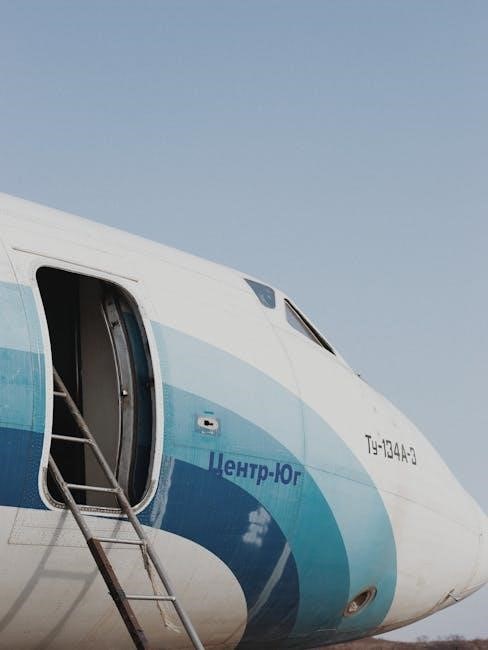
The TU-22, a Soviet supersonic bomber, reached Mach 1.5, designed to penetrate NATO defenses and strike strategic European targets before interception.
TU-22: Soviet Supersonic Bomber
The Tupolev Tu-22, designated by NATO as the ‘Blinder,’ represents a significant leap in Soviet strategic bombing capabilities. As the nation’s first supersonic bomber, it was specifically engineered to supersede the subsonic Tu-16, offering a crucial advantage in penetrating enemy airspace. Its primary mission revolved around delivering strikes against strategic targets within Europe, aiming to breach air defenses before interceptor aircraft could effectively respond.
Capable of achieving speeds up to Mach 1.5, the Tu-22’s design prioritized speed and altitude. This allowed it to traverse vast distances quickly and operate above the effective range of many contemporary air defense systems. The aircraft played a vital role in the Soviet Union’s Cold War deterrence strategy, demonstrating a credible threat to Western European nations.
Resolution Comparison: 1080P vs. 4K
As of January 1st, 2026, comparative CPU performance benchmarks reveal a significant difference between 1080p and 4K gaming resolutions. Testing, utilizing a GeForce RTX 5090 graphics card, demonstrates the increased processing demands of 4K. While data remains limited due to the recent launch of the Intel Core i9-9950X3D, initial results from TechPowerUp’s CPU hierarchy clearly illustrate the performance gap.
Visually, 4K (3840 x 2160 pixels) offers four times the resolution of 1080p (1920 x 1080 pixels), resulting in substantially sharper and more detailed images. However, achieving smooth frame rates at 4K necessitates a more powerful CPU and GPU, impacting overall system cost and performance. The benchmarks highlight the evolving demands of modern gaming and display technology.

Future Developments & Trends
Emerging PDF technology will likely integrate “Tu Mundo” into digital education, enhancing learning experiences with interactive and visually rich content formats.
Emerging Trends in PDF Technology
The evolution of PDF technology is rapidly incorporating dynamic elements, moving beyond static document presentation. Interactive features, such as embedded multimedia and responsive layouts, are becoming increasingly prevalent. This shift aligns perfectly with the rich symbolism inherent in “Tu Mundo PDF,” allowing for a more engaging exploration of its historical and cultural context.
Furthermore, advancements in optical character recognition (OCR) and artificial intelligence (AI) are enhancing PDF accessibility and searchability. These technologies can automatically extract text and metadata from scanned images, like those found within historical “Tu Mundo” documents, making them more readily available for research and study. The integration of blockchain technology is also being explored for secure document verification and provenance tracking, potentially safeguarding the authenticity of digitized “Tu Mundo” manuscripts.
The Role of “Tu Mundo” in Digital Education
Digitizing “Tu Mundo PDF” offers unique opportunities within digital education, particularly in art history, religious studies, and language learning. The high-resolution images allow for detailed examination of the artwork’s symbolism – the Tree of Life and evangelist representations – fostering critical thinking skills. Interactive PDFs can incorporate annotations, quizzes, and virtual tours, enhancing student engagement.
Moreover, “Tu Mundo” serves as a compelling case study for exploring historical document preservation and digital humanities. Students can learn about the challenges of digitizing fragile manuscripts and the importance of metadata standards (like ISO 3602). The text’s linguistic roots also provide a context for Spanish language instruction, illustrating the nuances of “te,” “tú,” and “tu” within a meaningful cultural artifact.
“Tu Mundo PDF” bridges historical artistry with modern digital access, offering educational value from its origins to contemporary applications in learning and research.
Recap of Key Information
“Tu Mundo PDF” represents a fascinating intersection of art, history, and language. Initially conceived between the 10th and 11th centuries, it visually portrays Christ as the triumphant source of life, beautifully embedded within the symbolic Tree of Life. This imagery is further enriched by the inclusion of symbols representing the four evangelists, adding layers of theological depth.
The document’s name itself, referencing “tu” in Spanish, highlights linguistic nuances. Furthermore, the context extends to modern technological applications, as evidenced by its digital PDF format. Cultural anecdotes, like François Mitterrand’s use of “tu,” demonstrate its broader societal relevance. Ultimately, “Tu Mundo PDF” serves as a unique artifact, bridging ancient symbolism with contemporary accessibility.
Further Research and Resources
Delving deeper into “Tu Mundo PDF” requires exploring its historical roots in medieval art and religious iconography. Researching the symbolism of the Tree of Life and the specific attributes assigned to each evangelist will provide valuable context. Linguistic studies focusing on the evolution of Spanish pronouns – “te,” “tú,” and “tu” – are also crucial.
For technical aspects, investigating PDF technology advancements and their impact on preserving historical documents is recommended. Examining the 3TU Federation (TU Berlin, TU Delft, TU/e) and ISO 3602 standards offers insight into international collaboration and standardization. Finally, exploring resources on François Mitterrand’s political style and the significance of formal versus informal address can enrich understanding.